Which Chicago Airport Is Best For Corporate Travel?
Chicago is a premier global corporate destination served by two major aviation hubs: O’Hare International Airport (ORD) and Midway International Airport (MDW). The city’s iconic skyline and stunning Lake Michigan shoreline attract millions of business and leisure travelers from across the globe. While on business, you may even be able to enjoy some “bleisure” time—taking an architectural river cruise, exploring the world-class Art Institute, or walking the scenic Lakefront Trail with views of North Avenue Beach, Oak Street Beach, and the sprawling Millennium Park.
When your Chicago business trip takes you to the Loop, River North, or the surrounding suburbs, selecting the right airport can make all the difference in terms of convenience, efficiency, and cost-effectiveness. Below is a breakdown of the pros and cons of utilizing O’Hare International (ORD) and Midway International (MDW) for your Chicago corporate travel.
Each airport serves as a distinctive gateway to this bustling metro region, offering unique advantages—from O’Hare’s massive global connectivity to Midway’s streamlined, “in-and-out” efficiency. Understanding the unique characteristics of these two hubs can significantly impact your business itinerary and overall travel experience when traveling to the Windy City.
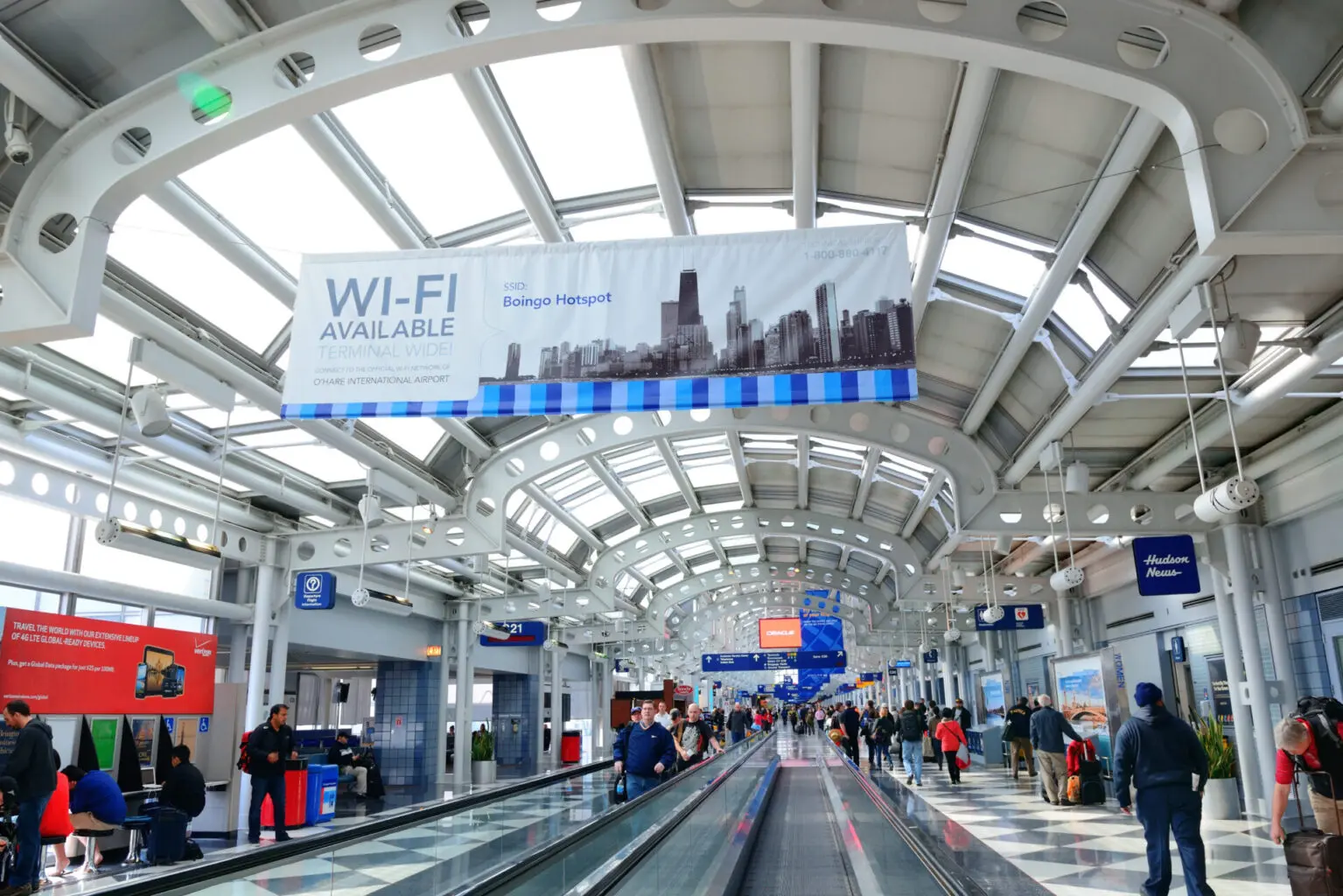
CHICAGO, IL – MAR 31: Chicago O’Hare Airport interior on March 31, 2013 in Chicago, Illinois. It is the world’s second busiest airport and was voted the “Best Airport in North America” for 10 years
Chicago O’Hare International Airport (ORD) Corporate Travel
Opened for commercial passenger service in 1955 and operated by the Chicago Department of Aviation, O’Hare International Airport is located on the city’s Northwest Side, roughly 17 miles from the Loop. As of 2026, O’Hare has reclaimed its position as the busiest airfield in the United States, serving as a massive global engine for corporate travel.
With more than 45 airlines providing nonstop service to over 250 domestic and international destinations, O’Hare is consistently recognized as the most connected airport in the country. It serves as a primary dual-hub for both United Airlines and American Airlines, offering business travelers unparalleled flight frequency and global reach. Whether you are heading to a domestic meeting or an international summit, O’Hare stands as the essential Midwestern gateway for seamless corporate connectivity.
Pros About O’Hare International Airport:
- Global Business Connectivity: ORD is a premier international gateway, offering more nonstop destinations than any other airport in the U.S. It is the ideal hub for global business travelers, providing unmatched connectivity to major markets in Europe, Asia, and South America.
- Premier Business Facilities: O’Hare features an extensive network of luxury lounges—including the United Polaris Lounge and American Airlines Flagship Lounge—as well as state-of-the-art business centers equipped with high-speed Wi-Fi and private meeting spaces.
- Strategic Location: ORD is located approximately 17 miles Northwest of the Chicago Loop. Its location is perfect for business travel focused on downtown Chicago, as well as the Northwest Corporate Corridor (Rosemont, Schaumburg, and Elk Grove Village). It is exceptionally convenient for major conferences at the Donald E. Stephens Convention Center and large-scale corporate group events.
Cons About O’Hare International Airport:
- High Volume and Congestion: As one of the world’s busiest aviation hubs, O’Hare manages a massive volume of global business and domestic leisure travelers. This can lead to longer wait times at security and potential ground delays during peak travel windows or inclement winter weather.
- Navigational Scale: ORD is an expansive facility. Navigating between terminals—especially when transferring from the International Terminal (Terminal 5) to domestic gates—can be time-consuming. Business travelers on a tight schedule for a Loop or Northwest Corridor meeting should account for extra transit time within the airport.
- Regional Proximity: While O’Hare is ideal for the North Side and Northwest suburbs, it may not be the most efficient choice if your business is centered in the South Side or Southwest suburbs. In those cases, Midway (MDW) is often the faster, more convenient alternative.
Chicago Midway USA Airport Highway Sign 3D Illustration
Chicago Midway International Airport (MDW) Corporate Travel
Chicago Midway International Airport was originally established as Chicago Air Park in 1923, primarily serving airmail pilots. In 1927, it was dedicated as Chicago Municipal Airport, quickly becoming the nation’s premier aviation hub. In 1949, the airport was officially renamed Midway to honor the historic Battle of Midway during World War II. For decades—from 1932 until the rise of the jet age in 1961—Midway held the prestigious title of the “World’s Busiest Airport,” serving as the epicenter of American commercial flight.
Today, Midway is a vital driver of Chicago’s economy and a favorite for corporate travelers seeking efficiency. It is consistently ranked among the top 30 busiest airports in North America, serving over 22 million passengers annually. Its location on the city’s Southwest Side, just 10 miles from the Loop, makes it an exceptionally convenient gateway for business travelers visiting downtown Chicago or the southern corporate corridors. As a major base for Southwest Airlines, Midway offers high-frequency domestic service and competitive options that make it an essential hub for regional and national business travel.
Pros About Midway International Airport:
- Cost-Effective: Frequently offers lower fares, especially with carriers like Southwest, making it a smart option for companies aiming to reduce business travel costs.
- Efficiency: Smaller and more compact than O’Hare, which often means shorter security lines, quicker baggage claim, and faster airport navigation overall.
- Location: Located about 10 miles southwest of downtown Chicago, making it highly convenient for business travel to the Loop, West Loop, South Loop, and surrounding neighborhoods. Its proximity can significantly reduce ground transportation time compared to O’Hare.
Cons About Midway International Airport:
- Limited International Flights: Fewer direct international routes compared to Chicago O’Hare (ORD), often requiring connections for overseas travel.
- Congestion During Peak Times: Can become crowded during morning and evening rush hours due to high volume of domestic and leisure travelers.
- Fewer Corporate Travel Amenities: Offers fewer airline lounges, conference spaces, and premium business services compared to larger hub airports like ORD.
- Weather Sensitivity: Winter weather in Chicago can cause delays more frequently, and Midway’s shorter runways can amplify operational disruptions.
- Location limitations: While close to downtown, it may be less convenient for business meetings in Chicago’s northern suburbs, where O’Hare is typically the better option.
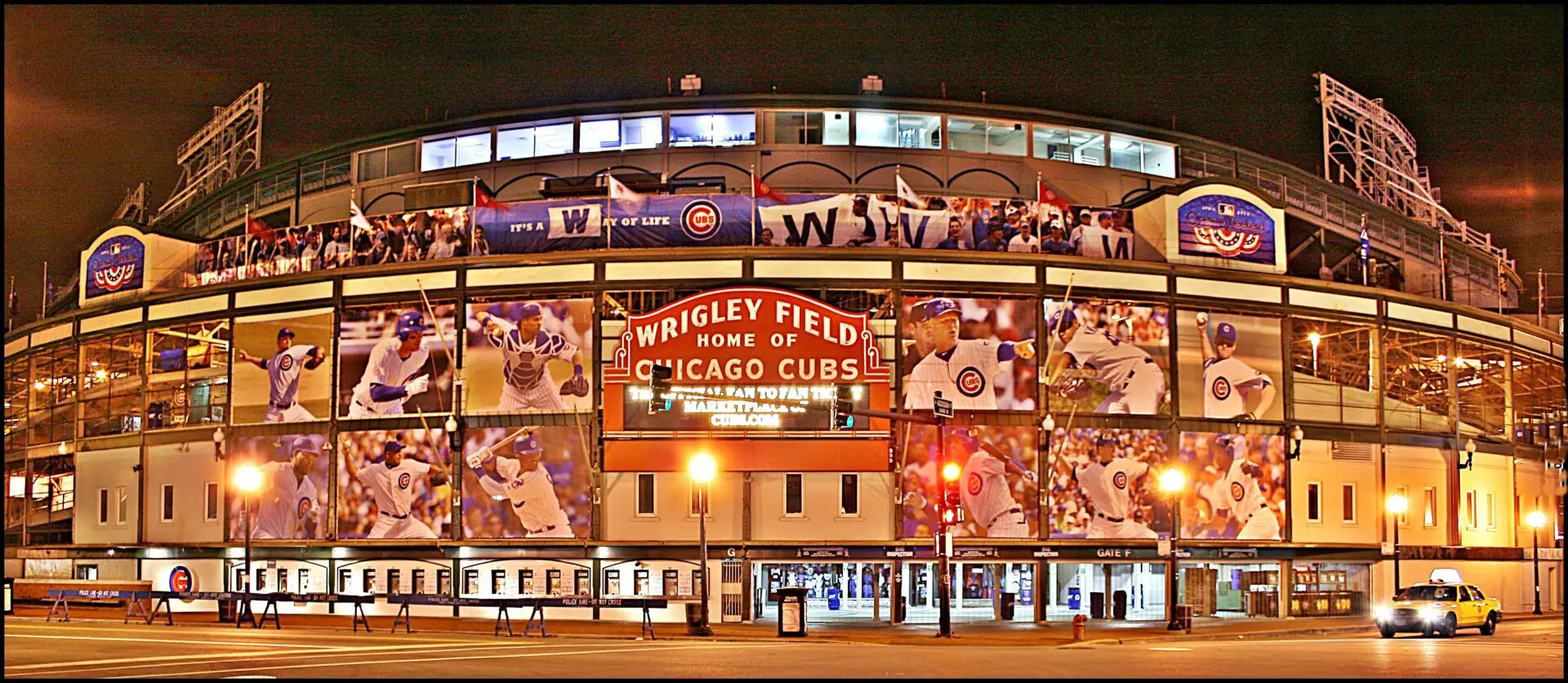
Wrigley Field,the home of the Chicago Cubs baseball team is shown in this view taken on 4/2/11,one day after the season opener.
Choosing Your Airport
When choosing between ORD and MDW for business travel, consider your specific needs:
- Chicago O’Hare International Airport (ORD) offers the most extensive domestic and international connectivity, making it ideal for executives and global business travelers. Its wide range of nonstop routes and premium airline lounges support complex itineraries and international corporate travel.
- Chicago Midway International Airport (MDW) provides a more efficient and cost-effective experience for frequent domestic travelers. Its compact layout, faster processing times, and strong regional access make it well-suited for short trips and recurring business travel within the U.S.
No matter which airport you choose, Chicago is a premier corporate travel destination with exceptional offerings for today’s business traveler. Learn more about Teplis Travel’s Chicago corporate travel expertise through our dedicated Teplis Travel Chicago Corporate Travel webpage. Find out more…
From world-class convention centers like McCormick Place to executive-level meeting spaces in the Loop and West Loop, Chicago provides a wide range of versatile venues for corporate meetings, conferences, and events. Beyond its robust business infrastructure, Chicago’s rich culture, renowned dining scene, and iconic architecture make it an ideal location for client entertainment, team-building events, and executive retreats.
As a trusted corporate travel agency with over 50 years of experience, Teplis Travel’s knowledgeable agents understand the unique demands of business travel. We help companies navigate the best flights, hotels, and ground transportation for business trips through Chicago and the greater Midwest. Our comprehensive travel management solutions include 24/7 support, real-time flight alerts, and access to exclusive corporate rates, ensuring your trip runs smoothly from departure to arrival.
Happy travels—and may your Chicago business trip be productive, successful, and seamless from takeoff to touchdown!
This blog was reviewed for accuracy by:
Ted Petty, CIO/CTO Teplis Travel
Ted is a seasoned expert in the corporate and leisure travel industry, currently serving as the Chief Information Officer (CIO) and Chief Technology Officer (CTO) at Teplis Corporate Travel Agency.