Which Dallas Airport Is Best For Corporate Travel?
Dallas is a premier corporate destination served by two major aviation hubs: Dallas/Fort Worth International Airport (DFW) and Dallas Love Field (DAL). The region’s concentration of Fortune 500 headquarters and its distinctive blend of Southern hospitality and big-city energy attract millions of business and leisure travelers from around the world. While on business, you may even be able to enjoy some “bleisure” time: exploring the Dallas Arts District, visiting The Sixth Floor Museum at Dealey Plaza, grabbing a bite at Pecan Lodge in Deep Ellum, or taking in the skyline views from Reunion Tower and Klyde Warren Park.
When your Dallas business trip takes you to Downtown, Uptown, Las Colinas, or the fast-growing corporate corridors of Plano, Frisco, and Fort Worth, selecting the right airport can make all the difference in terms of convenience, efficiency, and cost-effectiveness. Below is a breakdown of the pros and cons of using DFW International and Dallas Love Field for your Dallas corporate travel.
Each airport serves as a distinctive gateway to this sprawling metro region, offering unique advantages, from DFW’s expansive global connectivity to Love Field’s streamlined, close-in efficiency for domestic travelers. Understanding the unique characteristics of these two hubs can significantly impact your business itinerary and overall travel experience when traveling to North Texas.
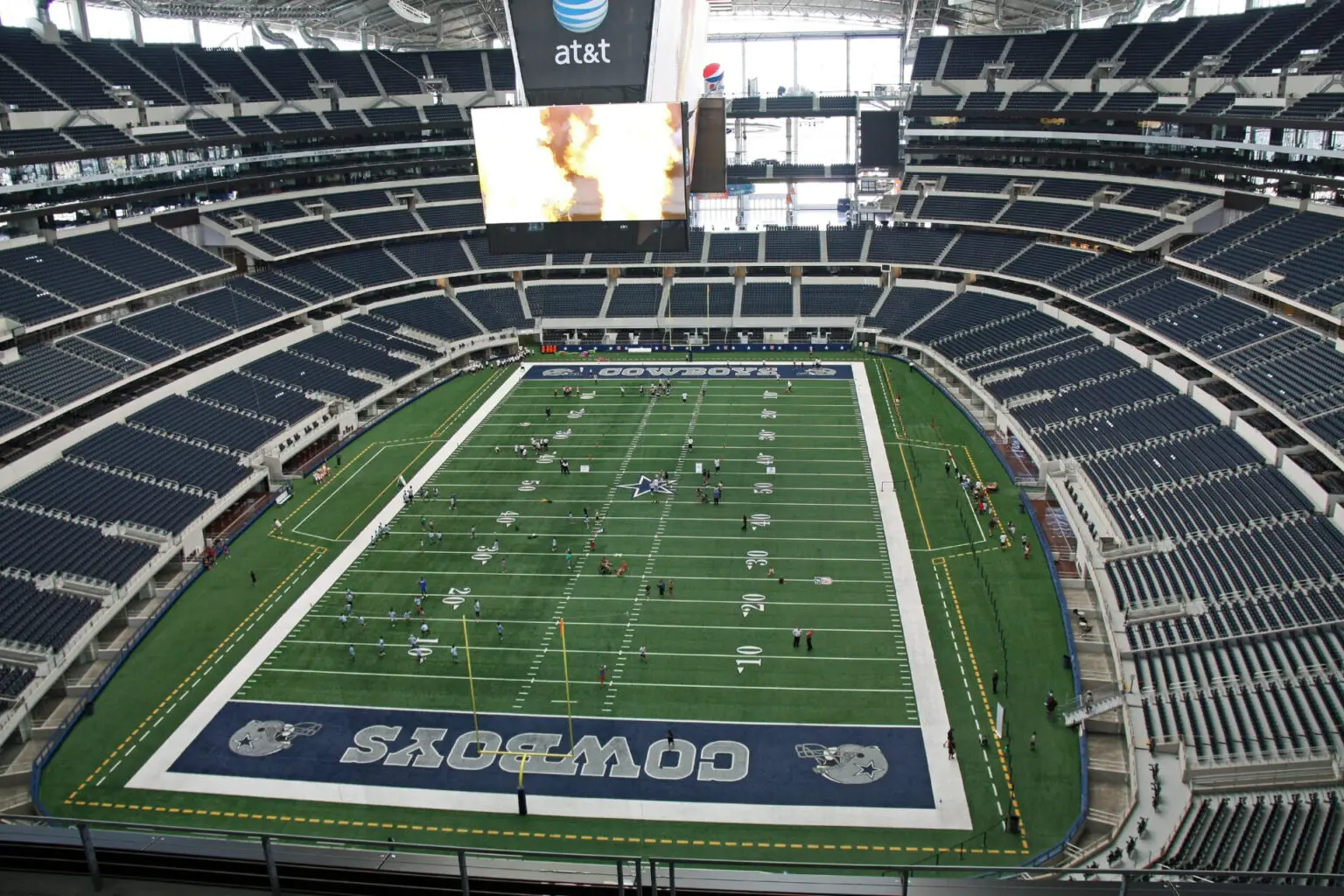
ARLINGTON – JUNE 17: Taken in Cowboys Stadium Arlington TX. on Thursday June 17 2010. An inside view of Cowboys Stadium and the giant video monitor from the endzone upper deck. Super Bowl XLV will played here in 2011.
Dallas/Fort Worth International Airport (DFW) Corporate Travel
Opened for commercial passenger service in 1974 and jointly owned by the cities of Dallas and Fort Worth, Dallas/Fort Worth International Airport is located midway between the two cities, roughly 18 miles northwest of Downtown Dallas and about 20 miles northeast of Downtown Fort Worth. Covering more than 17,000 acres, an area larger than the island of Manhattan, DFW ranks among the busiest airports in the world by passenger traffic and serves as the primary gateway for corporate travel across North Texas.
With more than two dozen passenger airlines providing nonstop service to well over 250 destinations, including dozens of international cities across Europe, Asia, Latin America, and the Middle East, DFW is consistently recognized as one of the most well-connected airports on the globe. It serves as the largest hub for American Airlines, which is headquartered just minutes away in Fort Worth, offering business travelers exceptional flight frequency and reliable domestic and international reach. Whether you are heading to a regional sales meeting or a global board summit, DFW stands as the essential front door to North Texas, delivering direct access to Las Colinas, Downtown Dallas, Fort Worth, and the region’s thriving corporate corridors.
Pros About Dallas/Fort Worth International Airport:
- Global Business Connectivity: DFW is the premier gateway for both domestic and international corporate travel in the region, offering nonstop service to major U.S. cities and key global business centers such as London, Tokyo, Frankfurt, Mexico City, and Seoul. It is the ideal hub for executives and business travelers who require quick, reliable connections through its primary carrier, American Airlines, along with a strong roster of international airlines.
- Premier Business Facilities: DFW features an extensive selection of lounges, including multiple Admirals Clubs, the American Airlines Flagship Lounge, the American Express Centurion Lounge, and the Capital One Lounge, as well as modern terminal amenities with high-speed Wi-Fi and comfortable workspaces designed to keep business travelers productive. The Skylink automated train connects all terminals inside security, making tight connections far more manageable.
- Strategic Location: DFW sits at the geographic center of the Dallas–Fort Worth Metroplex, making it convenient for business travel to both major cities. It is especially well positioned for the Las Colinas business district in Irving, the Gaylord Texan Resort & Convention Center in Grapevine, and the Irving Convention Center, and it offers straightforward access to the Kay Bailey Hutchison Convention Center in Downtown Dallas and the Fort Worth Convention Center. Rail service via DART and TEXRail provides additional ground transportation options into both downtowns.
Cons About Dallas/Fort Worth International Airport:
- Sheer Size and Volume: As one of the world’s busiest airports, DFW manages an enormous volume of corporate, connecting, and leisure travelers year-round. Its five terminals and vast footprint can mean long walks, longer security lines, and potential ground delays during peak travel windows, holidays, and major events. Ongoing terminal renovations and expansion projects can also add to congestion and wayfinding challenges.
- Weather-Related Disruptions: North Texas is known for severe spring thunderstorms, summer heat, and occasional winter ice storms. Because DFW is such a major connecting hub for American Airlines, weather events can trigger widespread delays and cancellations that ripple across the entire network, so building buffer time into important itineraries is wise.
- Regional Proximity: While DFW is ideal for Las Colinas, Irving, Grapevine, and both downtown areas, it may not be the most efficient choice if your business is centered in the northern suburbs such as McKinney, Allen, or the northern stretches of Frisco and Plano. Depending on your destination and traffic along the region’s busy highways, McKinney National Airport (DTX) may offer a shorter drive, though with far more limited flight options.
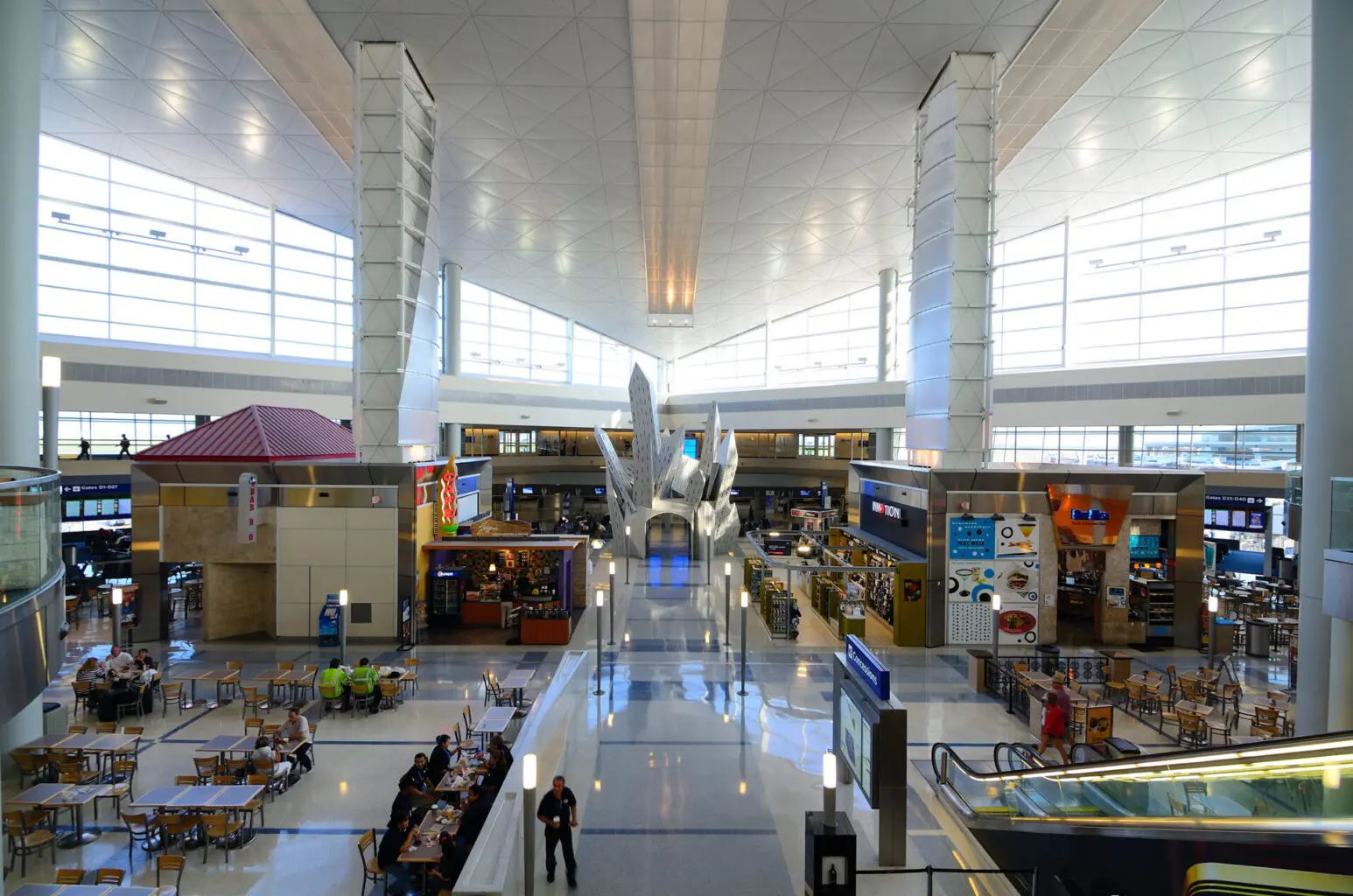
DALLAS, TEXAS – JULY 4: Dallas/Fort Worth International Airport is the third busiest airport in the world in terms of aircraft movements July 4, 2011 in Dallas, Texas.
Dallas Love Field (DAL) Corporate Travel
Dallas Love Field has its roots dating back to 1917, when it opened as a U.S. Army aviation training field named in honor of Lieutenant Moss Lee Love, an Army aviator killed in a training accident. The City of Dallas purchased the field in 1927 and converted it into a municipal airport, and for decades Love Field served as the region’s primary commercial gateway. Its role shifted in 1974 with the opening of Dallas/Fort Worth International Airport, but Love Field carved out a distinctive new identity as the home of Southwest Airlines, which launched service there in 1971 and remains headquartered on the airport grounds today. For years, the federal Wright Amendment limited where flights from Love Field could go, but those restrictions were fully lifted in 2014, the same year the airport completed a major modernization of its terminal. Since then, Love Field has grown steadily as a convenient, close-in option for business travelers across the region.
Today, Dallas Love Field is owned and operated by the City of Dallas and serves more than 16 million passengers annually. Its location just 6 miles northwest of Downtown Dallas makes it one of the most centrally located major airports in the country, with quick access to Downtown, Uptown, the Medical District, and the Park Cities. As the headquarters and largest operating base for Southwest Airlines, Love Field offers high-frequency domestic service and competitive fares, with additional service from carriers such as Delta and Alaska Airlines, making it an efficient and cost-conscious option for domestic corporate travel.
Pros About Dallas Love Field:
- Unmatched Proximity to the Urban Core: Located approximately 6 miles from Downtown Dallas, Love Field is the closest commercial airport to the city center. It is the most convenient choice for business travel to Downtown, Uptown, the Southwestern Medical District, the Dallas Market Center, the Design District, and the Kay Bailey Hutchison Convention Center, often cutting ground transportation time significantly compared to DFW.
- Efficient and Navigable Layout: Love Field features a single, compact terminal with 20 gates, offering a far more streamlined experience than the sprawling multi-terminal layout at DFW. Shorter walks, straightforward wayfinding, and quicker access from curb to gate make it a practical, time-efficient choice for business travelers on tight schedules and same-day round trips.
- Cost-Effective Domestic Travel: Thanks to Southwest Airlines’ strong presence and high flight frequency, Love Field regularly offers competitive fares and flexible booking options, including Southwest’s traditionally generous change policies. For companies looking to control travel spend on domestic routes, Love Field is often an excellent value.
- Modern, Business-Friendly Terminal: The fully modernized terminal offers updated dining and retail, local Dallas restaurant concepts, charging stations, and free Wi-Fi, creating a comfortable and productive environment for travelers before departure.
Cons About Dallas Love Field:
- Limited International Service: Love Field is primarily a domestic airport, with no dedicated international arrivals facility and a federal agreement that caps the terminal at 20 gates. Business travelers requiring nonstop flights to Europe, Asia, or Latin America will need to route through DFW, making Love Field a less practical choice for global corporate itineraries or complex multi-city international trips.
- Fewer Carriers and Premium Amenities: Southwest Airlines operates the vast majority of flights at Love Field, which means fewer carrier options for travelers loyal to other airline programs or companies with preferred-airline agreements. The airport also lacks the extensive airline lounge network found at DFW, so executives accustomed to premium lounge access and full-service business amenities may find the offerings more limited.
- Regional Proximity: While Love Field is ideal for Downtown Dallas, Uptown, the Medical District, and the Park Cities, it may not be the most efficient choice for business travelers whose meetings are concentrated in Fort Worth, Arlington, or Grapevine. In those cases, Dallas/Fort Worth International (DFW) is often the faster, more practical alternative.

DALLAS, TX – SEP 17: Klyde Warren Park in Dallas, Texas, as seen on Sep 17, 2016. The urban park is open to the public, but is operated by the private Woodall Rodgers Park Foundation.
When choosing between DFW and DAL for business travel, consider your specific needs:
- Dallas/Fort Worth International Airport (DFW) provides the region’s broadest global connectivity, making it the essential gateway for executives and international business travelers. Its extensive nonstop network spanning Europe, Asia, Latin America, and the Middle East, combined with premium lounges and its role as American Airlines’ largest hub, makes it the strongest choice for complex international itineraries and business centered in Las Colinas, Irving, Grapevine, or Fort Worth.
- Dallas Love Field (DAL) offers the most convenient and time-efficient experience for domestic business travelers, particularly those with meetings concentrated in Downtown Dallas, Uptown, the Medical District, or the Park Cities. Its close-in location, competitive Southwest Airlines fares, and compact single-terminal layout make it the go-to choice for quick turnaround trips, budget-conscious corporate travel, and high-frequency domestic routes.

DALLAS, TX, USA-JUL 14, 2018:Artificial turf berm, crawl tunnel at children area in Klyde Warren Park. A 5.2-acre public place in downtown Dallas. Water fountain, splash pad concrete seating, boulders
Making the Most of Your Dallas Business Trip: Bleisure Awaits
Dallas is far more than a corporate powerhouse. It is a world-class destination brimming with culture, history, cuisine, and academic energy that makes it one of the most rewarding cities in the country for bleisure travel. When your meetings wrap early or the weekend beckons, Big D offers an extraordinary range of experiences that seamlessly blend business with pleasure.
Start in the Dallas Arts District, the largest contiguous urban arts district in the nation, where the Dallas Museum of Art, the Nasher Sculpture Center, and the Crow Museum of Asian Art can fill an entire afternoon with inspiration. Just steps away, Klyde Warren Park offers green space, food trucks, and skyline views, while The Sixth Floor Museum at Dealey Plaza provides a moving look at one of the most significant moments in American history. Cap the evening with dinner at The Mansion Restaurant at Rosewood Mansion on Turtle Creek, one of Dallas’s most storied dining destinations, or explore the lively restaurant and music scene in Deep Ellum.
For those who appreciate the energy of a vibrant university town woven into a major city, Dallas delivers in abundance. Southern Methodist University’s campus in University Park offers one of the most picturesque strolls in the region, with its stately Georgian architecture and the George W. Bush Presidential Library and Museum on its grounds. To the north, the University of Texas at Dallas in Richardson has become a leading research university with deep ties to the region’s technology and telecommunications industries, while in southern Dallas, Paul Quinn College, one of the oldest historically Black colleges west of the Mississippi, carries a proud legacy of academic excellence and community leadership.
The region’s academic landscape extends well beyond the city limits. About 30 miles west, Texas Christian University anchors Fort Worth’s cultural scene, located near the city’s renowned Cultural District, home to the Kimbell Art Museum and the Amon Carter Museum of American Art. If your travels take you west, it is well worth pairing a campus visit with an evening at the historic Fort Worth Stockyards.
Whether you are taking in the spring blooms at the Dallas Arboretum, catching a performance at the AT&T Performing Arts Center, visiting the State Fair of Texas in the fall, or simply wandering through the charming streets of the Bishop Arts District, Dallas rewards the curious business traveler at every turn. The city is not just a place to conduct business. It is a destination worth savoring.
No matter which airport you choose, Dallas is a world-class corporate travel destination with exceptional offerings for today’s business traveler. Learn more about Teplis Travel’s Dallas corporate travel expertise through our dedicated Teplis Travel Dallas Corporate Travel webpage. Find out more…
From world-class convention centers like the Kay Bailey Hutchison Convention Center Dallas to executive-level meeting spaces in Downtown, Uptown, Las Colinas, and Plano’s Legacy West, Dallas provides a wide range of versatile venues for corporate meetings, conferences, and events. Beyond its robust business infrastructure, the region’s rich history, world-renowned cultural institutions, acclaimed dining scene, and vibrant academic community make it an ideal location for client entertainment, team-building events, and executive retreats.
As a trusted corporate travel agency with over 50 years of experience, Teplis Travel’s knowledgeable agents understand the unique demands of business travel. We help companies navigate the best flights, hotels, and ground transportation for business trips to Dallas and the greater North Texas region. Our comprehensive travel management solutions include 24/7 support, real-time flight alerts, and access to exclusive corporate rates, ensuring your trip runs smoothly from departure to arrival.
Happy travels, and may your Dallas business trip be productive, successful, and seamless from takeoff to touchdown!
This blog was reviewed for accuracy by:
Omar Davis, IT Analyst
Omar is a valued member of the Teplis Travel team, helping to ensure the accuracy and quality of the agency’s corporate travel resources and content. Find out more at Corporate Travel Agency.